


Oven Cleaning Services for Your Home
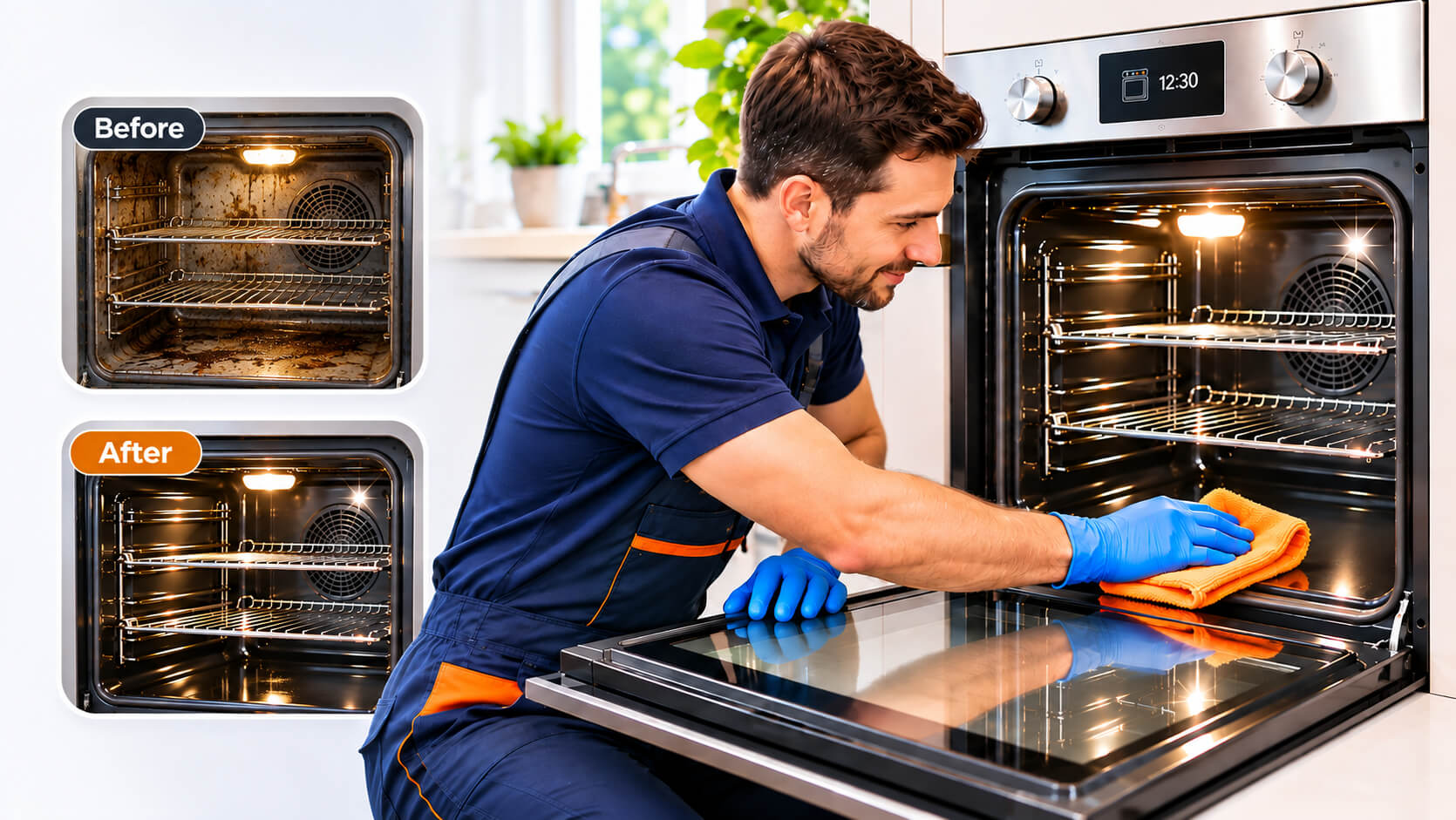
Professional oven cleaning helps remove built-up grease, burnt-on food and stubborn residue from the oven interior and accessible components. What is included depends on the appliance and the service you select.
With MyConstructor, choose the oven type and any optional items, then enter your preferred date and postcode to check booking options. Review the service details before confirming, particularly if you need additional appliances cleaned.
Book Professional Oven Cleaning Online
- Single, double, range and AGA ovens
- Oven interiors, racks and door glass
- Optional hobs, extractors and microwaves
- Choose your preferred appointment date
- Check local options with your postcode
- Instant prices; card, PayPal, Google/Apple Pay or on-site

What's the type of appliance that needs cleaning?
Would you like any of the following to be cleaned?


Recently booked jobs



What to Expect from Professional Oven Cleaning
Professional oven cleaning removes accumulated grease, baked-on food and stubborn residue from the parts of an oven covered by the selected service. It is designed for appliances that need more attention than a routine wipe-down, including ovens with deposits on the interior surfaces, door glass and removable components. The work should be appropriate for the appliance model, materials and condition.
Professional oven cleaning services can save you time when dealing with difficult deposits, but results depend on your oven's condition. An oven deep clean may improve accessible surfaces, but it cannot reverse permanent marks, corrosion, damaged seals or other defects. Check which components are included in your selected oven cleaning service.
Oven cleaning process and final checks
An oven cleaning appointment normally begins with a check of the appliance and the areas that need attention. The professional can identify accessible components, heavy deposits and visible damage before deciding which cleaning methods are suitable. If your oven has specialist coatings or manufacturer-specific care instructions, mention these before work begins.
Depending on the appliance and the booked scope, the work may include removing suitable racks and trays, loosening burnt-on residue, cleaning accessible interior surfaces and wiping the door glass. Components that have been removed are returned as appropriate, followed by a final visual check. Fixed components should not be dismantled by the customer in preparation for the visit.
Important safety distinction: Cleaning is not a repair service. If the oven has cracked glass, damaged wiring, a defective seal or an electrical fault, explain the problem before the appointment and arrange suitable repair advice where needed.
A clean-looking oven does not prove that an appliance is mechanically sound. Any concerns about heating, controls or electrical safety should be dealt with separately from the cleaning appointment.
Oven interior, racks and door glass
The oven interior, accessible door glass and included removable racks are common areas of attention during professional oven cleaning. Grease and food deposits can build up on cavity walls, around corners and on shelves. Their condition and accessibility will influence the method used and the final appearance.
Before booking a home oven cleaning service, distinguish between the oven itself and separate accessories or appliances. The following areas may be relevant, but check your selected package rather than assuming every item is automatically covered.
- Interior surfaces: accessible walls, floor and other suitable cavity surfaces.
- Door glass: surfaces that can be cleaned safely without unapproved dismantling.
- Racks and trays: removable items included in the selected service.
- Edges and corners: accessible spaces where crumbs or grease may collect.
Self-cleaning liners, catalytic panels, specialist finishes and heavily worn components may require different care. Give the professional any relevant manufacturer instructions and confirm the treatment of unusual surfaces rather than expecting one cleaning method to suit every oven.
Preparation and oven aftercare
Before an oven cleaning visit, switch the appliance off, allow it to cool and make the surrounding area accessible. Remove loose personal items, clear the space immediately around the cooker and tell the professional about any known damage or unusual features. Do not apply additional cleaning products immediately before the appointment unless you have been advised to do so.
After the service, follow the professional's instructions about ventilation, drying and when the oven can next be used. Once the appliance is cool after future cooking, wiping up fresh spills can help limit the build-up of stubborn residue. Keep cleaning products away from children and pets and follow the product and appliance manufacturers' directions.
Cleaning chemicals can pose risks if handled or mixed incorrectly. The UK's Health and Safety Executive advises controls appropriate to the substance and task, including attention to ventilation and protection from skin or eye contact. Professional cleaning does not remove the need to handle household products safely between appointments.
Cooker Cleaning and Oven Types
Choosing the correct oven type helps ensure that the booking matches the appliance that needs cleaning. A single oven, double oven, range cooker and AGA can differ in size, number of compartments, removable components and surface materials. These details affect what you need to select and what the professional may need to know in advance.
When selecting an oven cleaner service, use the actual layout of your cooker rather than its appearance alone. MyConstructor's form provides separate appliance choices and additional size or configuration options for certain models. If you are unsure which category applies, check the appliance manual or clarify the details before confirming.
Single and double oven cleaning
A single oven usually has one main cooking cavity, while a double oven has two separate cooking compartments. A second cavity may be a smaller oven or grill, so count the usable compartments rather than assuming that every appliance with a grill is a single oven. Choose the option that accurately represents the cooker in your kitchen.
Size also matters. The booking form may ask whether an oven is standard or wide, and different racks or trays may need to be included or confirmed separately. If you have removable accessories beyond those normally supplied with the appliance, describe them before the appointment so the scope is clear.
Before choosing a cooker cleaning service, check the number of oven cavities, door arrangement and any unusual internal surfaces. These details help ensure you select the right appliance category.
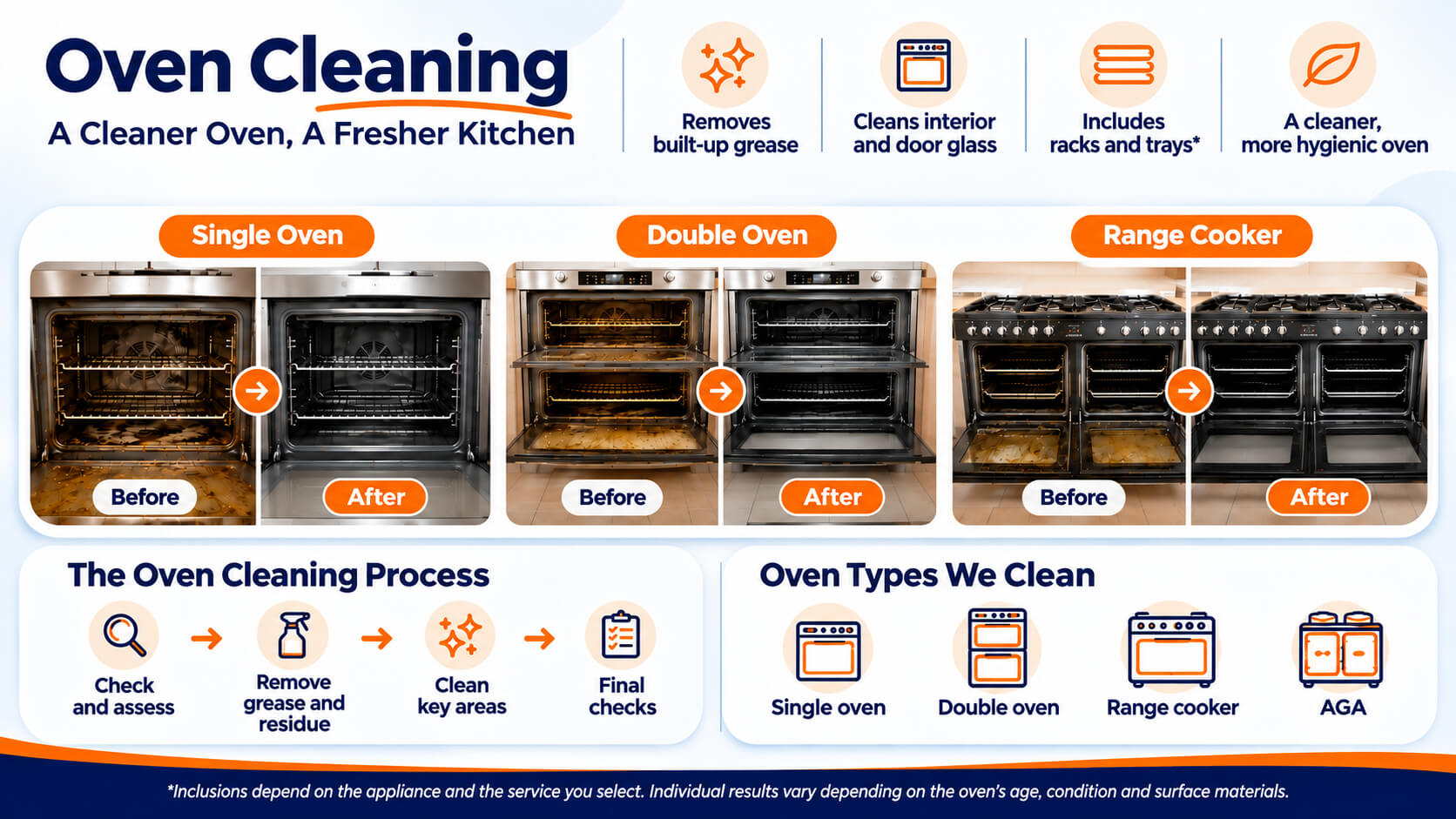
If your cooker has more than one door or an unusual configuration, check the model and number of cooking compartments before choosing your service. Confirm any specialist finishes or additional modules in advance so the cleaning requirements are clear.
Range and AGA oven cleaning
Range cookers and AGA appliances can contain several cooking compartments and components that need different handling. A range cooker may have multiple ovens, a separate grill and a hob across the top. An AGA or other heat-storage cooker can have a specialist construction, surfaces and operating requirements that make accurate model information especially important.
MyConstructor's form distinguishes range cooker sizes and AGA configurations. Select the appropriate category and provide details about the number of doors or modules. Do not assume that hotplates, hob sections, extractor components or every accessory are part of the basic oven clean; check which extras are available to select.
| Appliance | Typical layout | Check before booking |
|---|---|---|
| Single oven | One main cooking cavity | Standard or wide size; racks and trays |
| Double oven | Two separate cooking compartments | Both cavities and any additional accessories |
| Range cooker | Wider cooker with multiple sections | Overall size, cavities and optional hob cleaning |
| AGA | Specialist cooker with varying door or module layouts | Exact configuration and manufacturer care instructions |
Use the table to find the category that best matches your cooker, then check the selected service to see which components are included. To understand how appliance size and optional extras may affect your quote, read our oven cleaning cost guide.
Additional appliances and exclusions
Hobs, extractors, microwaves and splashbacks should be treated as separate items unless they are expressly included in your selected booking. The form can present these as optional additions, so review each choice rather than relying on the name of the main oven service. Additional racks, trays or unusual accessories may also need clarification.
Professional cooker cleaning can remove suitable grease and residue from the areas covered by the booking, but it does not repair faults, replace broken parts or reverse permanent surface damage. A professional may need to avoid components with unsuitable finishes or existing damage. If you have a self-cleaning oven, specialist liner or heat-storage appliance, explain the model and follow its manufacturer guidance.
Before choosing extras: Check whether each additional appliance is shown in the booking form and whether its cleaning scope is described. If something is not listed, do not assume that it can be added without prior agreement.
When comparing cooker cleaning services, check which oven, hob and additional items are covered by each option. Knowing what is included helps avoid misunderstandings about what will be cleaned during the visit.
Book Oven Cleaning Online
You can book an oven clean online with MyConstructor by choosing your appliance and checking the options for your postcode and preferred date. Select the correct oven and any extras you need, then review the appointment options shown for your address. Available appointments for oven cleaning in the UK can vary by area, date and appliance selection.
Before confirming, review the appliance category, optional extras, appointment details and total price displayed. If your cooker is unusually large or has specialist components, make sure the selected option matches its configuration. Choose a service that covers the cleaning you need, rather than relying on the appointment time alone.
Selecting your oven and extras
Start with the oven type that matches the appliance you actually own. The booking form distinguishes single ovens, double ovens, range cookers and AGA appliances, with additional configuration choices where relevant. Selecting the correct category helps define the service you are requesting.
Use this short sequence to review the selections in a sensible order:
- Choose the main appliance. Check the number of cavities and its type.
- Confirm the configuration. Select the size, doors or modules where requested.
- Add suitable extras. Include any available hob, extractor, microwave or splashback option you need.
- Review the service scope. Check that the selected items match what you expect to be cleaned.
If an additional item is not available in the form, do not assume it is automatically included. Keep a note of any specialist surfaces or existing defects so these can be explained before cleaning begins.
Postcode and preferred date
Your postcode and preferred date help determine which oven cleaning booking options can be shown for your location. Enter the details accurately and review the appointment choices presented by the platform. Availability can vary by area, day and the appliance or extras selected.
To check whether suitable appointments are offered for your address and preferred date, visit our oven cleaning near me page. Select your appliance and review the options displayed before confirming.
Selecting a preferred date does not guarantee a particular appointment time. Check the options offered for your address and appliance, then review the details before you confirm.
Reviewing your booking details
Before confirming your oven cleaning, check that the summary matches your appliance, address, selected extras and appointment details. Make sure you understand the listed price and what is included, particularly when the cooker has more than one compartment or requires specialist handling.
Review the payment options offered at checkout and select the method suitable for your booking. The platform may present card, PayPal, Google Pay, Apple Pay or on-site payment options where supported; follow the choices displayed for your transaction rather than assuming that every method is available in every situation.
On the day, provide safe access to a cool appliance and mention any relevant faults or manufacturer instructions. After the professional has finished, ask about any necessary waiting period before using the oven again. These final checks help keep the expectations for the service clear from booking through to completion.
Official legislation and safety guidance:
Consumer Rights Act 2015: Section 49 COSHH Regulations 2002 HSE: Safe Use of Cleaning Substances
Consumer law requires services to be provided with reasonable care and skill. COSHH requirements address relevant workplace risks from hazardous substances, while HSE guidance explains practical precautions for cleaning products. These sources do not define the scope or guarantee the results of an individual oven cleaning booking.
Frequently Asked Questions About Oven Cleaning


There is no fixed duration for a professional oven cleaning appointment. The time needed depends on the number of cavities, the appliance design, removable components and the amount of baked-on residue. A lightly soiled single oven may take less time than a heavily used double oven or range cooker. Allow for variation and check any timing information provided for your booking.
There is no universal interval for booking professional oven cleaning. It depends on how frequently you cook, the amount of grease and food residue produced, and how well you maintain the oven between visits. Consider a professional clean when normal maintenance no longer removes stubborn deposits. Follow the manufacturer's advice for specialist surfaces and self-cleaning features.
Professional oven cleaners would normally bring the equipment and cleaning products needed for the selected service, but confirm the arrangements for your booking. Tell the professional in advance about specialist oven surfaces, known damage or concerns about cleaning-product sensitivities. Do not mix your own chemicals with products used during the appointment or assume a particular cleaning method will be suitable for every appliance.
Professional oven cleaning may reduce cooking smells caused by grease and food residue on accessible surfaces, but it cannot guarantee the removal of every odour. Persistent smells may come from areas outside the cleaning scope, ventilation issues or appliance faults. If you notice an unusual electrical or burning smell, stop using the appliance and seek appropriate repair advice rather than relying on cleaning alone.
You can usually use your oven after professional cleaning once it is safe to do so and the professional has confirmed any necessary waiting time. This depends on the cleaning products used, the appliance and whether any surfaces need to dry. Follow the aftercare instructions provided, and do not switch the oven on if you notice unusual smells or signs of damage.