


Smoke Alarm Testing for Mains & Interlinked Alarms
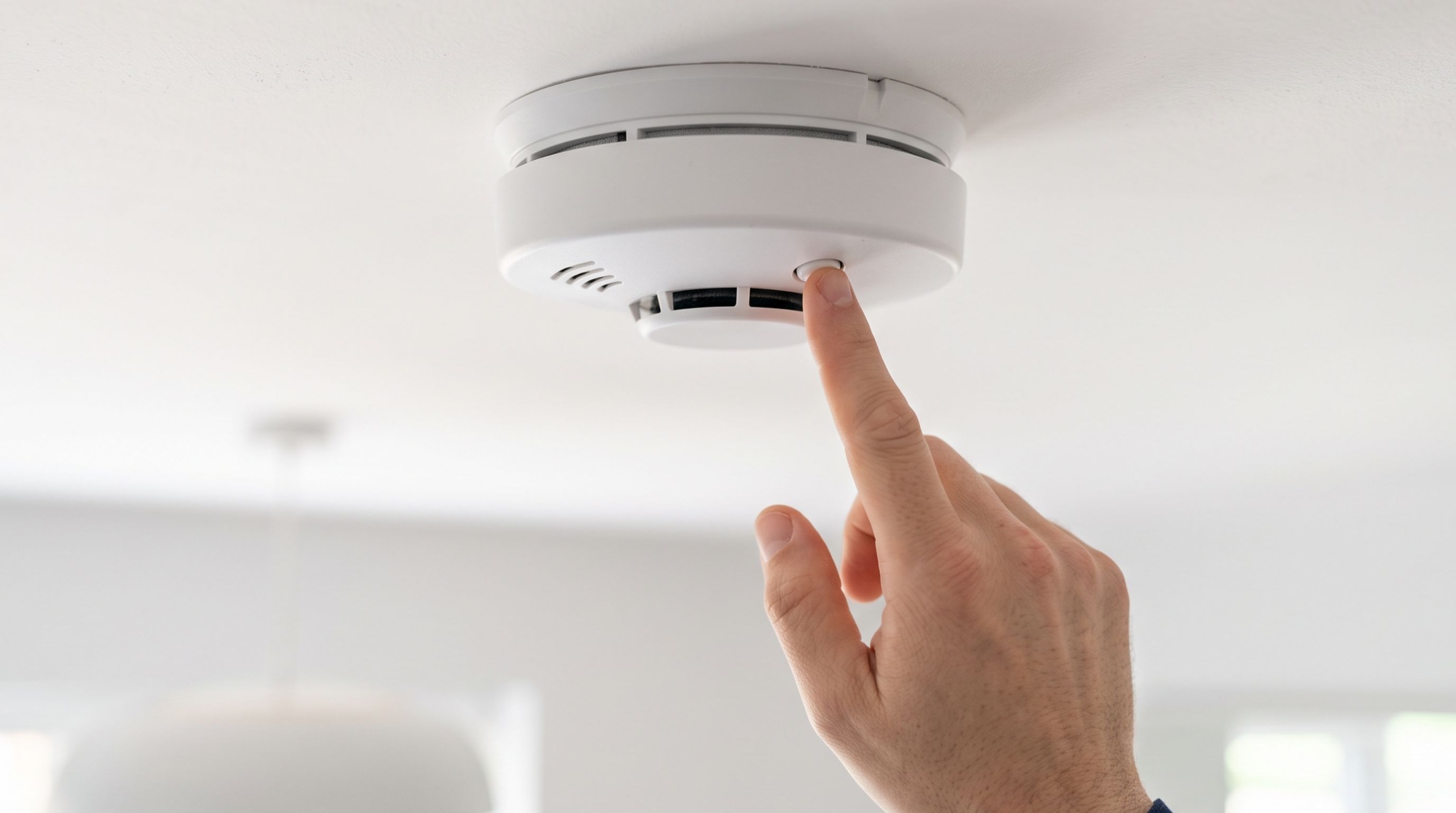
Smoke alarm testing checks mains-powered, hard-wired and interlinked domestic smoke alarms for correct operation, power or fault indicators, backup power and communication between connected units. It is suitable for homes, rental properties and HMOs.
The service covers individual domestic alarms rather than complete panel-based fire alarm systems. Written testing records may also be provided where included in the booking.
Book Smoke Alarm Testing Online
- Same-day bookings in selected areas
- Flexible hours, book a time that suits you
- Compare prices before booking
- Check customer reviews
- Card, PayPal, Google Pay, Apple Pay or on-site

Choose your service:



Recently booked jobs
Professional smoke alarm testing for domestic properties
A professional smoke alarm testing service checks domestic mains-powered, hard-wired and interlinked alarms for correct operation, visible faults, power status and interlink performance.
The service is suitable for homes, rental properties, landlords, HMOs and managed residential accommodation where individual or interconnected domestic smoke alarms are installed. Where documentation is included, you may also receive a smoke alarm certificate, testing record or service report showing the alarms checked and any recorded observations.
A routine test-button check is useful for occupants, but it is not the same as a structured smoke alarm inspection. Professional testing can be useful where several alarms are interlinked, where a landlord or property manager wants written records or where an alarm shows a fault that is not easy to identify.
If the property has a fire alarm control panel, zones, manual call points, sounders and detectors connected as one wider system, use our Fire Alarm System Testing & Certificate service instead.
What does smoke alarm testing include?
Smoke alarm testing combines functional checks, visual inspection and basic safety observations to confirm whether the alarms included in the booking operate as expected.
The exact checks depend on the alarm type and booked scope. For mains-powered, hard-wired and interlinked alarms, testing can include alarm activation, power or fault indicators, backup power and communication between connected units.
| Check | What is reviewed |
|---|---|
| Alarm function | Whether the alarm responds and produces an audible warning when tested. |
| Mains power status | Visible power and fault indicators on mains-connected alarms. |
| Backup power | Backup power indicators or warning conditions where provided by the alarm. |
| Interlink operation | Whether connected alarms sound together as expected when activated. |
| Physical condition | Obvious damage, obstruction, contamination or visible warning indicators. |
| Testing documentation | Results, observations and follow-up actions where written documentation is included. |
What does a smoke alarm inspection check?
A smoke alarm inspection can include checks of the alarm’s physical condition, visible power or fault indicators, functional response, backup power and interlink operation where applicable.
The inspection can also identify obvious signs of damage, obstruction, contamination or warning conditions that may require further investigation. For mains-powered and interlinked alarms, the professional can also review whether the units appear to be receiving power and whether connected alarms respond together as expected.
Where written documentation is included in the booking, the results of the inspection can be recorded in a smoke alarm certificate, testing record or service report, together with any observations or recommended follow-up actions.
Mains-powered, hard-wired & interlinked smoke alarms
Mains-powered and hard-wired smoke alarms are connected to the property’s electrical supply and may also include backup power, depending on the alarm model. Testing can include the alarm response together with visible power or fault indicators.
Interlinked smoke alarms are designed so that activating one connected alarm also warns occupants through the other linked units. During an interlink check, alarms included in the booking can be activated to confirm whether the connected units sound together as expected.
Interlinking may be wired or wireless depending on the equipment installed. An alarm can appear to operate correctly on its own while still having a problem communicating with the rest of the interconnected arrangement.
Smoke detector testing for domestic alarms
Smoke detector testing on this service refers to domestic smoke alarm units, including mains-powered, hard-wired and interlinked alarms where relevant.
Customers often search for smoke detector testing when referring to household smoke alarms. The important distinction is the equipment installed: detectors connected to a control panel, zones, manual call points and sounders form part of a wider fire alarm system rather than an individual domestic smoke alarm arrangement.
Smoke alarm testing for landlords
Smoke alarm testing for landlords can provide a structured check and written record of domestic alarms in a rental property, particularly where mains-powered, hard-wired or interlinked alarms are installed.
In England, relevant landlords must ensure at least one smoke alarm is equipped on each storey where there is a room used wholly or partly as living accommodation. Prescribed alarms must also be in proper working order on the day a new tenancy begins.
| Landlord requirement | What it means |
|---|---|
| Smoke alarms | At least one smoke alarm is required on each relevant storey containing living accommodation. |
| Start of tenancy | Prescribed alarms must be in proper working order when a new tenancy begins. |
| Reported faults | Faulty prescribed alarms must be repaired or replaced once the landlord is informed and the fault is established. |
| Alarm type | The regulations do not stipulate that every rented property must use mains-powered smoke alarms. |
| Professional certificate | The regulations do not state that a professional smoke alarm certificate must be obtained for every tenancy. |
Smoke alarm checks at the start of a tenancy
Checks must be made by or on behalf of the landlord to confirm that each prescribed alarm is in proper working order on the day a new tenancy begins. A professional visit can also provide written documentation where this is included in the booked service.
Smoke alarm testing during a tenancy
Routine smoke alarm testing does not normally require specialist skills. Tenants should follow the manufacturer’s instructions, test alarms regularly and report faults to the landlord. If an alarm does not respond, repeatedly chirps, shows a fault indicator or appears damaged, further investigation may be appropriate.
For the official requirements and practical guidance, see the GOV.UK smoke and carbon monoxide alarm guidance for landlords and tenants .
Smoke alarm certificates and testing records
A smoke alarm certificate or testing record provides written evidence of the domestic alarms checked during the appointment, where documentation is included in the booked service.
Depending on the provider and service selected, the document may be described as a smoke alarm certificate, smoke alarm testing certificate, testing record or service report.
What does a smoke alarm testing record show?
A smoke alarm testing record can include the property address, inspection date, alarm locations, checks completed, test results, visible faults, observations and any recommended follow-up work.
Do landlords need a smoke alarm certificate?
The Smoke and Carbon Monoxide Alarm Regulations do not state that a professional smoke alarm certificate must be obtained for every tenancy. Where supplied, the document should be treated as a record of the checks carried out rather than proof that every aspect of a property complies with all fire safety, building or licensing requirements.
Common smoke alarm problems
Smoke alarm testing can identify common problems such as loss of mains power, backup power warnings, interlink failures, contamination, physical damage and alarms that do not respond during testing.
- Loss of mains power: a supply or wiring issue may affect a hard-wired alarm.
- Backup power warning: low or failed backup power may trigger a warning or affect continued operation.
- Persistent beeping: chirping can indicate low power, contamination, a fault or an end-of-life warning.
- Interlink failure: one alarm may operate without triggering the other connected units.
- Physical damage or contamination: damage, paint, covers or debris may interfere with normal operation.
- No response during testing: an alarm that does not activate should be investigated.
Why is my smoke alarm beeping?
A beeping or chirping smoke alarm can indicate low backup power, loss of mains supply, contamination, a fault condition or the end of the alarm’s service life. The exact meaning depends on the alarm model and warning pattern.
Check the manufacturer’s instructions before resetting, disconnecting or removing the alarm. If the warning continues or the cause is unclear, further inspection may be appropriate.
What happens if a smoke alarm fails a test?
A failed smoke alarm test does not automatically mean that every alarm needs replacing. The next step may involve cleaning, battery replacement, alarm replacement, repair or further electrical investigation, depending on the fault and the booked scope.
Smoke alarm testing in HMOs
Smoke alarm testing in HMOs depends on the fire detection equipment installed. This service is suitable where the property contains domestic mains-powered, hard-wired or interlinked smoke alarms.
The appropriate alarm arrangement can depend on the building, layout, occupancy, local licensing conditions and wider fire safety requirements. HMOs using a control panel, zones, manual call points, sounders and connected detectors require testing appropriate to the wider fire alarm system.
How much does smoke alarm testing cost?
The cost of smoke alarm testing depends mainly on the number and type of alarms, the property and the complexity of any interlinked arrangement.
What affects smoke alarm testing prices?
- Number of alarms: more units generally require more time to test.
- Alarm type: mains-powered and hard-wired alarms may involve additional checks.
- Interlinking: several connected units may take longer to verify.
- Property size: larger or multi-storey properties may require more time on site.
- Accessibility: difficult-to-reach alarms may affect the appointment.
- Faults: failed tests or warning indicators may require further investigation.
- Location and availability: local professional availability may affect the price.
Enter your postcode and alarm details above to compare available professionals and smoke alarm testing prices for your property.
BS 5839-6 and domestic smoke alarm guidance
BS 5839-6:2019+A1:2020 is the BSI Code of Practice covering the planning, design, installation, commissioning and maintenance of fire detection and fire alarm systems in domestic premises.
The standard covers domestic alarm arrangements including system grades and categories, detector selection and siting, power supplies, wiring, commissioning and maintenance. It is a Code of Practice rather than legislation, and the appropriate arrangement depends on the property and equipment installed.
See the official BSI page for BS 5839-6:2019+A1:2020 for the standard’s official scope and status.
Book smoke alarm testing
Book smoke alarm testing by entering your property details and postcode to compare available professionals, prices, customer reviews and appointment times.
How to prepare for smoke alarm testing
Preparing for the appointment mainly involves providing safe access to the alarms included in the booking and sharing any known faults or previous testing records.
- Provide access: make sure alarms are not blocked.
- Notify occupants: alarms may sound during the visit.
- Prepare previous records: have earlier certificates or service reports available where possible.
- Mention known faults: report beeping, failed tests, warning lights or damage.
- Check access to all units: make sure every booked alarm can be safely reached.
Related property safety services
Some HMOs and managed buildings also have emergency escape lighting that requires separate inspection and maintenance. Where relevant, you can arrange emergency lighting testing as a separate service.
Before confirming the appointment, check the number and type of alarms included, whether interlink checks are required and whether a smoke alarm certificate, testing record or service report forms part of the booked service.
Frequently Asked Questions


Smoke alarms should be tested regularly using the test button and in line with the manufacturer’s instructions. Monthly testing is widely recommended for domestic alarms.
A routine test by an occupant is different from a booked inspection. A professional visit may be useful when an alarm shows a fault, several alarms are interlinked, a landlord wants written records or additional checks are needed.
Yes. Routine smoke alarm checks do not normally require specialist skills. Tenants can use the alarm’s test button and follow the manufacturer’s instructions to confirm that the unit responds.
If an alarm does not sound, repeatedly chirps, shows a fault indicator or appears damaged, the problem should be reported to the landlord or property manager and investigated.
The Smoke and Carbon Monoxide Alarm (England) Regulations require relevant landlords to provide the prescribed alarms and ensure that they are in proper working order when a new tenancy begins.
The regulations do not create a universal requirement for every landlord to arrange professional smoke alarm testing. A professional visit can still be useful where the landlord wants independent checks, written records or testing of several mains-powered or interlinked alarms.
In a correctly operating interlinked arrangement, activating one alarm should also trigger the other connected alarms.
If one unit sounds but the others do not, there may be an interlink, compatibility, power or device fault that requires further investigation.
Where written documentation is included with the booking, you may receive a smoke alarm certificate, testing record or service report after the appointment.
The document may record the alarms checked, results, faults, observations and recommended follow-up actions. A smoke alarm certificate is not a universal legal requirement for every home or rental property in England.
A smoke alarm may chirp because of low backup power, loss of mains supply, contamination, a fault condition or an end-of-life warning. The exact meaning depends on the alarm model.
Check the manufacturer’s instructions first. If the warning continues, the alarm fails a test or the cause is unclear, arrange further inspection rather than disabling the unit.
No. This service is designed for domestic smoke alarms, including mains-powered, hard-wired and interlinked units.
A property with a fire alarm control panel, zones, manual call points, sounders and detectors connected as one wider system requires a different type of fire alarm inspection. Choosing the service according to the equipment installed helps ensure that the correct checks are carried out.