


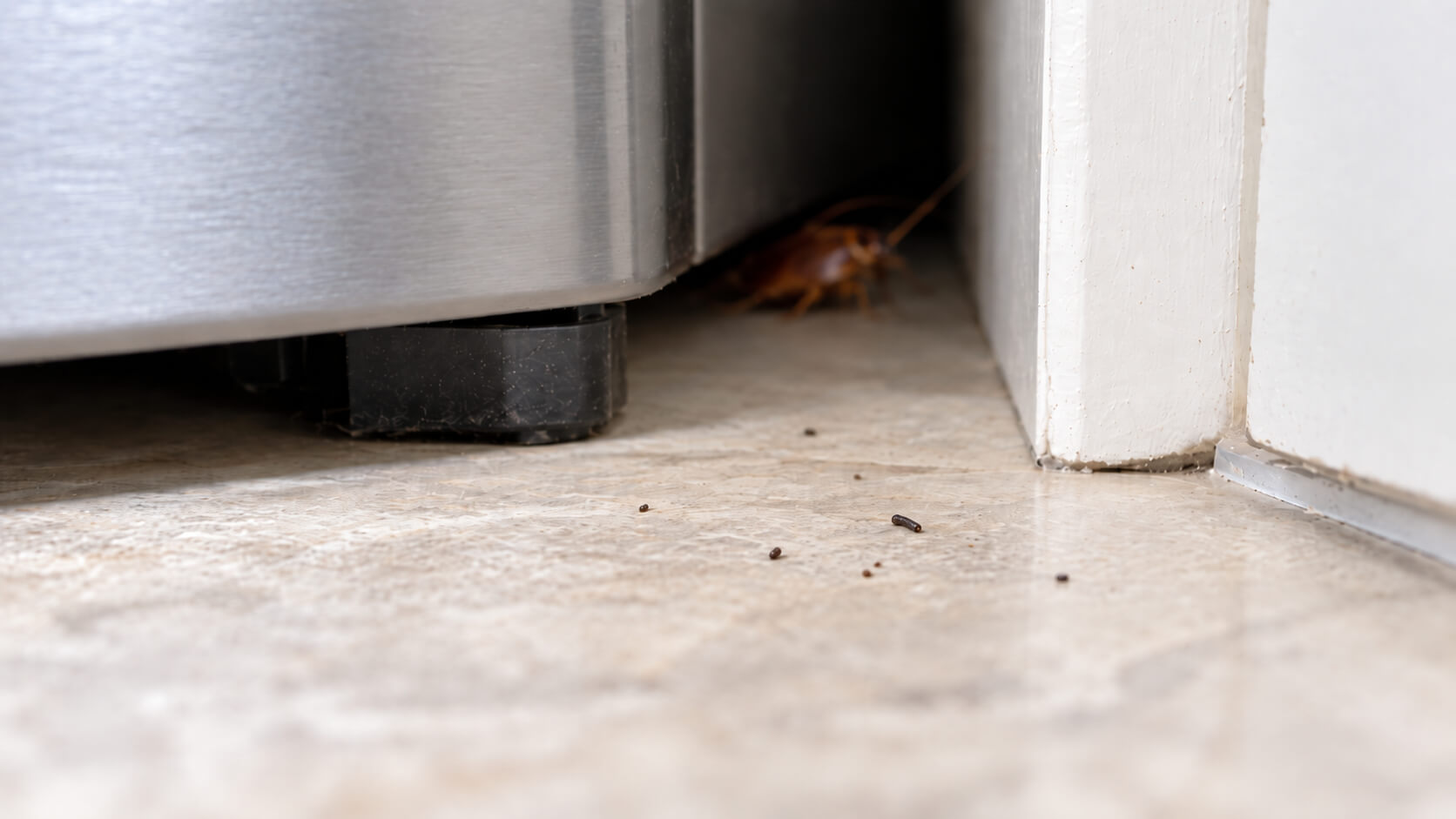
Cockroach droppings are usually dark brown to black and may appear as tiny specks, short marks or small cylindrical deposits. Their exact appearance varies with the size and life stage of the cockroach as well as the surface on which they are found.
This guide explains what cockroach poop looks like, including its typical colour, shape, size and where cockroach faeces may be noticed indoors.
Recently booked jobs


Cockroach Droppings: Appearance, Size and Location
Cockroach droppings can vary in colour, shape, texture and size, while the location where they are found provides additional identification context. Looking at several physical features together is more useful than relying on one dark mark or one characteristic alone.
Cockroach Droppings: Colour, Shape and Texture
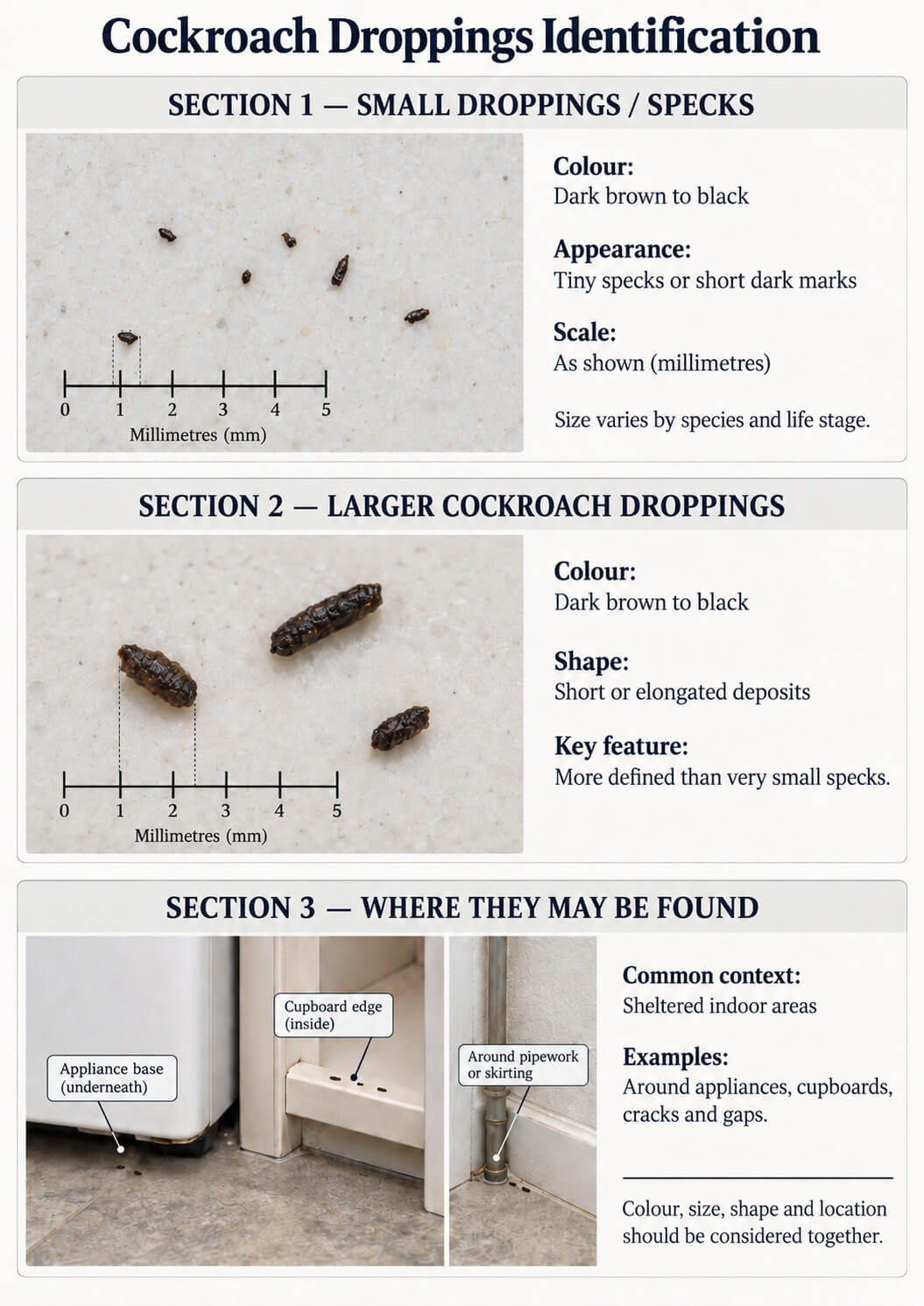
Cockroach droppings are generally dark brown to black, but their shape and texture can vary considerably. Smaller deposits may look like tiny dots, specks or short dark marks, while larger cockroaches can produce more noticeable cylindrical or elongated droppings.
Very small cockroach faeces may resemble coarse pepper or dark granular material when viewed from a distance. Larger deposits tend to have a more defined shape. The surface on which they are found can also affect how clearly their outline can be seen.
Colour alone is not enough for reliable identification. Size, shape, texture and surrounding context should be considered together before deciding whether a dark mark is likely to be cockroach faeces.
How Big Are Cockroach Droppings?
Cockroach droppings do not have one fixed size because their dimensions vary with the cockroach species and life stage. Smaller cockroaches and young nymphs generally leave finer marks than larger adults.
This means scale can be useful when examining an unknown deposit. A close-up photograph that includes a familiar object, ruler or other size reference can help show whether a mark is extremely small or more substantial.
Measurements should still be used alongside other features. Two dark deposits of a similar size can come from completely different sources, so size by itself should not be treated as proof.
Where Are Cockroach Droppings Found?
Cockroach droppings may be found in sheltered indoor areas where cockroaches move, rest or have access to food and moisture. Possible locations include cupboards, spaces around appliances, cracks, gaps, pipework and other protected areas.
Deposits may be more noticeable on pale shelves, flooring or surfaces because of their dark colouring. In narrow gaps or less visible areas, they may instead accumulate among dust and other small debris.
Location provides useful context, but it is not enough on its own to identify a mark. For a broader overview of cockroach appearance, life stages and the main species encountered in Britain, see our guide to cockroaches in the UK.
Cockroach Faeces: Freshness and Identification Evidence
Cockroach faeces should be assessed using several pieces of visual and contextual evidence rather than age or colour alone. Drying and indoor conditions can change how deposits appear, while good lighting, scale and repeated similar deposits can make identification more reliable.
Fresh and Old Cockroach Droppings
The appearance of cockroach droppings can change as the material dries and is exposed to indoor conditions. Older deposits may become dry or fragmented, but colour and texture can also be affected by humidity, the surface underneath and other environmental factors.
For this reason, appearance alone cannot reliably show how recently cockroach faeces were deposited. Size, shape, texture, location and the surrounding evidence should be considered together instead of trying to determine age from a single visual feature.
Cockroach Faeces: How to Check the Evidence
Cockroach faeces are easier to identify when several physical clues point in the same direction. Check the approximate size, dark colouring, shape, texture and location rather than relying on one characteristic.
Good lighting and a close-up photograph can make a significant difference because very small marks often lose detail when viewed from normal standing distance. Multiple similar deposits in the same sheltered area can also provide more useful visual context than one isolated speck.
If the material does not have a consistent faecal appearance, avoid identifying it from colour alone. Dust, food particles and other household debris can sometimes appear similar until examined more closely.

